Wednesday, June 2, 2010

De mezclas, una virgen, la identidad y Sor Juana en la época novohispana.


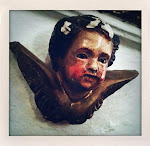
(Foto: Ana Ma. Pimentel)

El barroco, además de una vanguardia artística fue un estilo de vida puesto que fue formando a sus ciudadanos dentro de la búsqueda de la identidad. La vida novohispana se vio marcada por la contra-argumentación sobre los prejuicios de la geografía del Nuevo Mundo, la barbarie del indígena, también se caracterizó por el rescate del mundo vernáculo y la analogía de proporción con otras culturas clásicas reconocidas como civilizadas (léase: los egipcios antiguos), y se determinó por la síntesis entre cristianismo e indigenismo en figuras míticas como Santo Tomás, Quetzalcoátl y la Virgen de Guadalupe.

Tepeyac se compone de tépetl, cerro y yácatl, nariz, y al final la c que indica lugar. El signo gráfico remite a monte con nariz y la etimología a cerro saliente de la cordillera. En esta misma colina los aztecas adoraban a Tonantzin, la madre de todos los dioses.[1]

David Brading expone el reconocimiento por parte del criollo como bastardo […] como una especie de hijos de segundo matrimonio del rey, a quienes los herederos de la primera alianza negaban los derechos de su nacimiento.[2] Esta bastardía es hecha consciente por parte del criollo, quien busca elementos para ya no encontrarla negativa.

Sor Juana fue una mujer marcada por su bastardía, quien, de no ser por su sobrehumana capacidad literaria y artística, habría sido destinada a relegarse en el lugar de aquellos que no tienen patria ni cuna.

En esta búsqueda de identidad, el personaje criollo se sumerge en el mundo indígena y hace propios algunos elementos. Sin embargo, para comenzar esta apropiación de los componentes indígenas había primero que quitar los prejuicios existentes creados por los peninsulares. Y esta es la primera tarea del criollo para la creación de su identidad.

Más se admira Cabrera, como tantos otros, de la sabiduría y erudición, así como de su gigante aplicación, tan monstruosa como su ingenio y nos quiere hacer creer que esta flor y cultivo, como dice en feliz expresión refiriéndose a Sor Juana, se debió a la ciudad de México, a México mismo, a su realidad, que fue la que trabajó más.[3]

Sor Juana vive la época en que el criollismo tiene un drama de separación por ser un individuo distinto a su padre y a su madre. Y es que no se trata de un caso de orfandad, sino que hablamos de bastardía. Esto es, reconocerse de manera consciente como diferente a los padres, no por sangre sino por la tierra. Para que el criollo sea auto-consciente de su identidad, primero debe reconocerse como bastardo. El criollo tiene un sentimiento de reserva hacia sus padres.

Geográfica y políticamente, la Nueva España sufre de una falta de autonomía, puesto que es un Virreinato, gracias a lo cual no tiene independencia política: todo se consulta con el Rey de España, y Europa misma sufre una crisis fuerte. Con la reforma protestante de Lutero por un lado, y la Inquisición -que no juzgaba indígenas, pero sí criollos y peninsulares-, por el otro, o con los problemas económicos de España, el entorno cultural es complicado. Dominan los de la casa de Austria, seguidos por los Borbones, y todo el pensamiento novohispano gira en torno al catolicismo con la conquista espiritual, la cual por tanto, es una herramienta de poder:

La intención era clara: desde un principio se planificó una estrategia para cartografiar el espacio sagrado, delimitarlo y cercarlo por medio de una superposición de culturas que supuestamente, a lo largo del tiempo, iría desapareciendo. En otras palabras, el indígena olvidaría sus creencias puesto que a fuerza de confrontarse con sus dioses ahora “verdaderos”” iría adquiriendo progresivamente la sensibilidad para la nueva religión. Los resultados, sin embargo, reflejan un impresionante sincretismo cultural.[4]

Dado que los indígenas están en contacto directo con las sensaciones y la tierra, y dado que los españoles influidos por la necesidad de encontrar un lenguaje inmediato para comunicarse con los indígenas idearon una comunicación distinta a la del lenguaje escrito, entonces fue creciendo la idea de metáfora. La cultura barroca fue formándose de este modo.

La diferencia entre el concepto de signo y el de ícono es fundamental para comprender el estilo barroco de transmisión de mensaje. El barroco es simbólico, puesto que no es evidente su conjunto de ideas. El símbolo exige un contexto para ser comprendido. Sor Juana recorre el camino de la búsqueda de la identidad pasando por el náhuatl y por el español de los negros, el cual era más fonético que gramático y correcto:

Sará muy galana

Vitita ritela

Pisando la Sole

Milando la Steya.

Si observamos este fenómeno desde un punto de vista lingüístico, el templo, como signo, está constituido por el significante (construcción en forma de pirámide o iglesia) y el significado (lo denotado por los ídolos y las imágenes religiosas). Para los conquistadores, el nuevo templo podía erigirse manteniendo características del antiguo, pero el significado debía ser totalmente substituido por otras imágenes. Para los indígenas, el contenido del templo –el recuerdo de sus ídolos destruidos- se incluye ahora en el significante. La vaciedad del significado ha sido substituida y ahora es paradigmática a la concepción cristiana de Dios.[5]

El barroco mexicano pues, no es el rechazo al romanticismo (como se vio en Europa), puesto que éste movimiento no existió en el país. El barroco mexicano es una mentalidad; un estado del alma, la cual se viste para no sentirse llana. Es por esto que el barroco es adorno y lisonja a una autoestima que comienza a verse desolada. Así como en la música, la arquitectura o hasta la vestimenta, el barroco es movimiento perpetuo que refleja la complejidad de la situación.

Sor Juana evidencia esto cuando denota la angustia de buscar respuestas; sabe que no hay simplicidad en el embrollo de su realidad. Es por eso también que la lectura de los textos de la religiosa exige un esfuerzo extra del lector, además del brío que implicaría pasar la mirada sobre las letras. La ostentación barroca se mueve en las letras y en los significados, la metáfora muta permanentemente en los textos y llama al lector capacitado a desvelarla, y así, éste crea y recrea con ella el texto del que ahora los dos son parte.

En este sentido, y también debido a condiciones culturales, el estilo Tequitqui[6] es testimonio del sincretismo inevitable de la adjudicación de lo otro a lo propio, en ambas direcciones. […] esta apropiación del lugar por parte de los conquistadores podría considerarse una estrategia, dado que hay un intento por dominar al más débil. […] la estrategia asume un lugar que puede ser circunscrito como propio y así llega a servir como base para generar relaciones con un exterior diferente a sí mismo. Es a partir de ese lugar supuestamente propio desde el cual se intenta lograr la conquista espiritual de los indígenas. La táctica de los indígenas se manifiesta en la forma de utilización del templo.[7]

El barroco envuelve. Esto no se puede negar al escuchar un concierto o al entrar a una iglesia churrigueresca: las notas no paran y se superponen; son remolinos musicales que invitan a escuchar y salir de sí; los techos dorados y las columnas salomónicas que imitan el cuerpo humano se antojan envolventes y devoran. Y esto hace que no nos sorprenda que la iglesia hiciera honor a su raíz griega y fuera el único punto de reunión de las castas mexicanas.

Se trata de uno de los instantes en que con mayor claridad una sociedad fuertemente jerarquizada opta por una cultura simbólica y jeroglífica como medio favorito para manifestarse.[8]

La filosofía mexicana fue desarrollándose como el medio de contacto entre los mundos que se presentaban en la realidad indígena anterior, dividida en tres: el mundo divino, el humano y el de los muertos. La cultura indígena tomó fuerza de autoridad puesto que se tenía conocimiento de figuras importantes como Netzahualcóyotl (1402-1472), quien, además, no era una imagen tan lejana.

El criollo, en esta creación de elementos, busca el mundo indígena. Primero comienza por reconocer al indio como partícipe de la cristiandad. Con este paso, el indígena deja de ser “demoníaco”. Esto se deja ver cuando se relaciona el apóstol Santo Tomás con Quetzalcoátl. Se argumenta que el indígena participaba desde un principio de la cristiandad, incluso algunos rituales indios se comparan con sacramentos cristianos. El indígena antes de la venida de los españoles, vivía en una ley natural. Los españoles abrieron el mundo cristiano a los indígenas, por lo que el criollo se vuelve la síntesis de esa ley natural indígena y del cristianismo español.

La aparición de la Virgen de Guadalupe sintetiza este sentimiento criollo porque tanto indígenas como criollos se unieron a la veneración de la Guadalupana.

De acuerdo a Eduardo del Río, no se trataba de una sola deidad sino de un complejo ritual que comprendería todas las fuerzas fértiles de la naturaleza […] incluía la veneración a la tierra, la maternidad, e implicaba la superioridad del elemento femenino frente al masculino en la medida en que personificaba a la madre de Dios. Es decir que, gracias a las apariciones de una Virgen morena de rasgos indígenas, el santuario de Tonantzin pasó a convertirse en el recinto de una nueva veneración: la Guadalupana. El locus físico de la diosa azteca fue substituido por el de la nueva advocación mariana mexicana.[9] Un mito nacional había surgido, bastante poderoso, tras él se hallaba la devoción natural de las masas indígenas y la exaltación teológica del clero criollo. Con esta imagen, se excluye por completo al indígena del demonio. En el ámbito intelectual se liberó de manera efectiva a muchos letrados mexicanos de la obra de Torquemada y contribuyó también a la aprobación exterior de los nuevos temas. Además, comienza el criollo a adquirir confianza de su criollismo, cuyo segmento esencial de la identidad residía en su pasado indio como parte de la antigüedad mexicana.

Con el criollismo los elementos de una nueva síntesis habían aparecido: el pasado clásico regido por la religión natural, seguido del presente cristiano inspirado en la Guadalupana. La fuerza de este tipo de mitificaciones residía en que liberaban al criollo de sus orígenes españoles y lo vinculaban más con la tierra en donde había nacido, de manera que se reconociera como persona con mayores derechos que el peninsular, el cual sólo venía a enriquecerse sin estar vinculado a esta nueva tierra.

El criollismo es sincretismo, no hay que olvidar, por lo que también llevaba como bandera a San Ignacio de Loyola y a Francisco Suárez. El primero, con las misiones de la Compañía de Jesús como defender la libertad e ir en contra de las creencias paganas por vía de la razón, y buscando la educación puesto que se basaba en que el cambio es posible basado en la educación de la juventud. El segundo, Francisco Suárez, se pregunta si la conquista era legal o si presentaba violencia y se basaba en la ley natural para abrir la puerta al derecho internacional. Por esto es muy común que al hablar de identidad nacional se recurra a los jesuitas.

Así pues, vemos que América refleja su falta de homogeneidad en su pensamiento, y en este sentido la filosofía se presenta como amor a la sabiduría en servicio de los otros más que como sistema occidental.

Dado que Sor Juana es criolla, podemos sospechar que no tendrá forzosamente una línea de pensamiento clara (haciendo alusión al “carácter” de lo barroco), lo cual se comprueba con su método, pues al estudiar un tema confronta la misma idea en diferentes autores, y está de acuerdo con que las ventajas en el entender lo son en el ser.

Ella busca el papel del entendimiento frente al de la fe, a la vez que intenta hacer teología natural: teodicea, e investiga dentro de cualquier tipo de corrientes a la luz del pensamiento barroco, pero partiendo de la observación, lo que denuncia su influencia aristotélica. Dado que ella confiesa que estudia para ser menos ignorante, en vez de para adquirir sabiduría, notamos su tinte socrático, y, a mi juicio, de humildad cristiana. El barroco de Juana Inés es aquella lucha entre el amor a su entendimiento, pues la hace única y genial, y el cúmulo de problemas que éste le causa. No creo que haya sido difícil para ella saberse superdotada, sin embargo sí creo que fue probable que le costara algo de trabajo aceptar su genialidad debido a su exigencia de humildad religiosa.

Mientras la Gracia me excita

Por elevarme a la Esfera

Más me abate a lo profundo

El peso de mis miserias.

La virtud y la costumbre

En el corazón pelean,

Y el corazón agoniza

En tanto que lidian ellas

Y aunque es la virtud tan fuerte,

Temo que tal vez la venzan,

Que es muy grande la costumbre

Y está la virtud muy tierna.[10]

Sucede que la producción de Sor Juana tiene carácter ético, puesto que desdeña acciones que empobrecen al alma y aloja actitudes que hagan que ésta se supere; habrá que recordar que Sor Juana opina que el cuerpo no puede ser totalmente malo, puesto que en la filosofía cristiana existe la promesa de la Resurrección después del Juicio final; Sor Juana aboga por el hilemorfismo y una mejora del conjunto en consonancia.

Sor Juana creó desde villancicos hasta textos que encierran en la aparente evidencia de sus letras una exigencia de sabiduría por parte del lector. Me parece que esto implica que las palabras son el candado mismo para esconder las ideas, las cuales sólo aceptarán mostrársele a quien esté capacitado. Creo que esto sucede en todo arte, sin embargo en la literatura de Sor Juana la interpelación para el público es, además de la deducción, la erudición. Como dice Mauricio Beuchot: la antigüedad, la escolástica, el hermetismo y aun la modernidad, le dejan su huella. Fue atenta a todos esos movimientos del pensamiento, los supo recibir y transmitir.

Si de por sí es propio del Barroco no exponer con luz las ideas, Sor Juana se dedica a oscurecer aún más aquello que desee plasmar, puesto que al ser sumamente famosa sus letras son a la vez su yugo y su gloria. Irónicamente, la condición bajo la cual Sor Juana vive tiene también características barrocas, puesto que muestra dos opuestos que conviven juntos y que son condición sine qua non entre sí. Y es que Sor Juana por su estatuto de artista lleva el arte como estado del alma, lo cual demanda que ella tenga una válvula de escape de la necesidad de expresar su arte, por lo cual ella filtra sus sentimientos mediante la literatura. Ese cúmulo de sensaciones se imprime y ella sabe que está sujeta a él:

Si es malo, yo no lo sé;

Sé que nací tan poeta,

Que azotada, como Ovidio,

Suenan en metro mis quejas.[11]

Sor Juana presentó como trasfondo de sus textos, ya fueran los más vulgares o los más eruditos, que la vía de acceso a la verdad siempre será la sabiduría.

Oscurécese el discurso

entre confusas tinieblas;

pues, ¿quién podrá darme luz

si está la razón a ciegas?

De mí mesma soy verdugo

Y soy cárcel de mí mesma.

¿Quién vio que pena y menante

una propia cosa sean?[12]

El arte del asunto reside en la falta de evidencia del cami

[1] SALDARRIAGA, Patricia; Los espacios del Primero sueño de Sor Juana Inés de la Cruz: arquitectura y cuerpo femenino; Ed. Iberoamericana, España; pág. 55.

[2] Cfr. Brading, pág. 30.

[3] DE LA MAZA, Francisco, Sor Juana Inés de la Cruz ante la historia: biografías antiguas, la fama de 1700, noticias de 1667 a 1892; Revisión de Elías Trabulse, Recopilación de Fco. De la Maza, UNAM, México: 1980; pág. 300.

[4] SALDARRIAGA, Patricia; Los espacios del Primero sueño de Sor Juana Inés de la Cruz: arquitectura y cuerpo femenino; Edit. Iberoamericana, España, pág. 53.

[5] SALDARRIAGA, Patricia; Los espacios del Primero sueño de Sor Juana Inés de la Cruz: arquitectura y cuerpo femenino; Ed. Iberoamericana, España; pp. 53 y 54.

[6] Es el producto mestizo que aparece en América al interpretar los indígenas las imágenes de una religión importada (...) está sujeto a la superstición indígena. Es una extraña mezcla de estilos pertenecientes a tres épocas: románica, gótica y renacimiento. Es anacrónico, parece haber nacido fuera de tiempo, debido a que el indio adoctrinado por los frailes o los maestros venidos de Europa, recibía como modelos estampas, dibujos, marfiles, ricas telas bordadas, breviarios, cruces, y mil objetos menores. No todos ellos obedecían a un mismo estilo y a una misma época"

José Moreno Villa. Lo mexicano en las artes plásticas.

El término tequitqui significa "tributario". La influencia iconográfica y técnica europea fusionada a la técnica e iconografía indígena dio origen a un conjunto de manifestaciones singulares pictóricas y escultóricas. Este se manifestó principalmente en las portadas de los templos cristianos, cruces atriales y murales en los claustros y capillas abiertas de los conventos. También es utilizado como sinónimo el término arte indocristiano, propuesto por Constantino Reyes-Valerio en la obra homónima.

Obtenido de "http://es.wikipedia.org/wiki/Tequitqui"

[7]SALDARRIAGA, Patricia; Los espacios del Primero sueño de Sor Juana Inés de la Cruz: arquitectura y cuerpo femenino; Ed. Iberoamericana, España, pág. 54.

[8] Sor Juana y su mundo: una mirada actual; Edición, Sara Poot Herrera, Investigación y textos: varios autores; colaboración: Pablo Brescie, Patricia Díaz Cayeros, Alex Rivas. Universidad del Claustro de Sor Juana: Instituto de investigaciones de la cultura, en colaboración con FCE, México: 1995, pág. 253.

[9] SALDARRIAGA, Patricia; Los espacios del Primero sueño de Sor Juana Inés de la Cruz: arquitectura y cuerpo femenino; Ed. Iberoamericana, España; pág. 55.

[10] LÓPEZ FARJEAT, Luis Xavier y ZAGAL Arreguín, Héctor; Dos aproximaciones estéticas a la identidad nacional; Ed. Universidad Autónoma de Nuevo León, México: 1998; pág. 40.

[11] LÓPEZ FARJEAT, Luis Xavier y ZAGAL Arreguín, Héctor; Dos aproximaciones estéticas a la identidad nacional; Ed. Universidad Autónoma de Nuevo León, México: 1998; pág. 44.

[12] LÓPEZ FARJEAT, Luis Xavier y ZAGAL Arreguín, Héctor; Dos aproximaciones estéticas a la identidad nacional; Ed. Universidad Autónoma de Nuevo León, México: 1998; pág. 41.

FIFA FanFest 2010...


FROM SOUTH AFRICA TO MEXICO CITY.
FIND OUT WHY WE WILL HOST THE WORLD CUP
for the 3rd time.

During the Soccer World Cup Germany 2006, the FIFA Fan Fest was held for the first time, and it enabled 18 million people to attend the World Cup games by watching the matches through huge screens placed in focal points at the country. 18 million people is six times more people than the 12 stadiums where matches were played! Given this booming success, this year's FIFA authorities decided to extend the Festival to megacities such as Rio de Janeiro, Paris, Berlin, Rome, Sydney, and of course: Mexico City.
Some factors to select those cities were the popularity of soccer and the passion for this sport among the citizens of the potential host cities, the popularity of the place as a touristic destination and its cosmopolitan population, its demography and its experience on hosting top international competitions.
It is, therefore, the first time in the history of the FIFA World Cup that fans around the world will have the opportunity to experience the unique "experience of the FIFA World Cup" outside the WorldCup country. Iconic and central places for these transmissions have been chosen in each city, for instance, the Zocalo in Mexico City, the Gardens of Trocadero in Paris, the Tower Bridge in London, the Copacabana beach in Rio de Janeiro, Circus Maximum in Rome, Darling Harbour in Sydney and the Brandenburg Gate in Berlin. Mexico City, a touristic destination par excellence, Mexicans and foreigners seeking to enjoy the World Cup games can also know the city and its cultural offer within the framework of the celebrations of the centenary of the Mexican Revolution and the Bicentennial of Mexican Independence.
With the Zocalo dressed like a stadium, a giant screen and a premium sound and light show will mark the beginning of the transmission of the 64 games that promise to make an impact on attendees, since the main objective is to watch and feel as if people were watching the match live inside a real stadium. The advantages are that people will always have the best angles, zooming and repetitions with surround sound and there will be free access to the stadium, which will be enclosed to maintain security. Also, the Fan Fest FIFA International organizers, in conjunction with the Mexicana Soccer Federation (FMF) aim to provide a platform for African and South African cultures to be known at the host city of the Fan Fest as well as internationally. They will broadcast dance and cultural shows as well as domestic and foreign food to offer before and after games.


Mexico hosted the World Soccer Cup in 1986 and again in 1970. In 2010, thanks to technology, the World Cup is being played in South Africa but it also lives in Mexico.


When:
• This will be an all-day-long broadcasting of the FIFA World Cup: from June 11 to July 11 from 6 am to 7 pm.


What you need to know:

• The FIFA Fan Fest International transmissions will exceed the 32 matches of the package signed by the two major Mexican TV networks.
• At the first edition of this festival, 80% of the information related to the match area came from the centers of the FIFA Fan Fest. It is intended that the South African world is just as important.
• Although South Africa is home to the WorldCup,this country will also host the Fan Fest in order to bring together South Africans from different social conditions as well as visitors who could not attend the soccer games.

Top5 Museums to enjoy in Mexico City.


Yep. Mexico City has the largest number of museums in the world. Are you having problems with choosing? Don’t worry. I'll do the work for you and will pick interesting venues for you to visit effortlessly!

Here’s my top 5 museums (in no particular order) for this month...

MUTEC

There is a very High-Tech-looking building next to Papalote Museum. Well, it is MUTEC. Since everybody talks about global warming nowadays, the Tech Museum is a perfect destination, for it helps understand what happens with climate change and gives away tips for using electrical power properly. The whole family can talk with the home appliances in "La casa de la energía", which are pretty much alive: they’ll teach you how to change your everyday life. This was the first museum with the “anti-do-not-touch” concept, followed by the Exploratorium in SFO, CA. So, play with the levers, buttons and strings settled specially for you all over four big showrooms. Get on a helicopter and fly inside the museum driven only with the energy generated by your movement, or listen to what Edison has to say to Tesla over their inventions while their portraits talk to each other. How about ending your tour with a stroll through the gardens enjoying its giant sculptures?


Tuesdays to Sundays: 9am to 5pm.

Fee: free admission!
Address: Avenida Grande del Bosque # 1, 2nd Section of Chapultepec. 5516965/64.
Guided tours: look for the “ener-guías”, enthusiastic students who will explain every process and experiment for you.
Workshops: Origami, airplane’s creation and robotics for children and adults throughout the year during the weekends and during summers.

2. Antiguo Colegio de San Ildefonso
Have you ever wondered how could you draw a map of your country without aerial photographs or any modern instrument? Do you know which were the first maps in history? Do you know any tool to make maps? Do you think there are different kinds of maps? Discover all this while flying through the mexican territory without leaving the museum. Visit the eight showrooms’ exhibit: "Paseo en Mapa; exporando las claves de América Latina", which runs until July 25. Go out and get some air at the central courtyard and admire the museums’ permanent collection: the murals of Diego Rivera, Jean Charlot, Ramón Alva de la Canal, Revueltas and José Clemente Orozco that cover this building’s walls, a delight by its own means. A very tempting shop invites you to spend hours reviewing books, magazines, cards, kitsch and traditional crafts or Mexican designers’ jewelry for mom...


Hours: Wednesday to Sunday from 10am to 6pm. Tuesdays 10am to 8pm.
Fee: $45.00 Students and teachers with valid ID $22.50; general admission is $15.00 when there’s no temporary exhibits going on: students and teachers with valid ID: $7.50.

Admission is free for:
- Museum members
- Children under 12 years
- Older people
No fee on Tuesdays.
Address: Justo Sierra 16, Centro Histórico (behind Templo Mayor Site). 57026378.
Guided tours: for the building and temporary exhibits. Led by volunteer guides for free. Information: 57892505.
Workshops: Workshop "Opus corpus!" Tuesdays, Saturdays and Sundays, from 11am to 4pm. Fee: $30.00


3. Estanquillo Museum
Named Estanquillo because, like in Mexican “mercados”, you’ll find everything here. It houses Carlos Monsiváis’, (a famous Mexican writer) collection, endowed with pieces of all kinds, mainly on political cartoons, and historical photography from Mexico, but also piggy banks, models, toys, albums, calendars, advertising, music sheets and books. This site aims to treat art without solemnities and use it as a proof of physical and social changes of the city and the country itself: currently displaying the exhibit "Mexico through its causes (México a través de sus causas)", with all sorts of documents and pieces that witnessed the changes that the country suffered since the end of the 19th Century until late into the postrevolutionary era. Very ad-hoc nowadays, during Mexico’s bicentennial celebrations ... Mom will have a good time listening to the Adelita ballad or trying to recognize the city and the people that appear in the old photographs, an excellent pretext to challenge the historical knowledge of the whole family!
Hours: Wednesday to Monday: 10am to 6pm. Closed on Tuesdays.
Fee: free admission or conscious voluntary cooperation.
Address: Isabel la Católica 26 (& Madero St.) Centro Histórico. 55213052.
Workshops: Comic creation: Fridays 4pm to 7pm.

4. José Luis Cuevas Museum
An imposing Giant woman standing in the middle of the courtyard of the compound, protects the José Luis Cuevas’ self-portrait on her right knee. She invites you to visit the permanent collection of the museum, with over 1800 works of Latin American artists. Well saved but also open to the public is the Centre for Documentation and Research Octavio Paz, with a specialized & extensive archive on José Luis Cuevas, excellent for those wishing to enrich their knowledge after visiting the museum. Gerardo Cantú’s (born in 1934) “Un mismo amor”, is the temporary exhibition of drawing and painting that will run until June 10. It will remind you of the fauves’ work. Sometimes reminiscent of Cézanne as if he applied Gauguin’s use of the paintbrush, this Mexican living artist has a refined sense of social justice, and is convinced that art will prevent, maybe indirectly, delinquency and crime. As he says: "Art always serve these purposes." Surprise mom or your “mama-cita” with the free cultural shows offered by the museum: look for the schedule in our section VIP Tips latter in this article.
Hours: Tuesdays to Sundays, 10am to 6pm.
Fee: $ 20.00, 50% discount for teachers and students with a valid ID card. Free admission for members of INSEN.
Sundays free entrance.
Address: School No. 13, Centro Histórico: 55,220,156.
Workshops: drawing, painting and photography and more educational activities to get children and adults to approach art: Saturdays and Sundays from 11am to 3pm.
Guided tours: For public in general and school groups: 55426198 Ext 104.

5. Folk Art Museum (Museo de Arte Popular)
We’re received with a wall of indigenous languages’ greetings. In the yard, the train of history and many tables with facsimile newspapers from the revolutionary era show situations about Mexico’s history. This is one of the first choices for those who love tradition and folklore. This Art Déco building houses an impressive collection of everyday objects and ornamental, religious or magical pieces combining the naive idea of art with Mexican materials and identities. Enjoy a short film on crafts at the auditorium every day, and enjoy yourself on Sundays listening to the storytellers that entertain people at the courtyard.


Hours: Tuesdays to Sundays, 10am to 6pm. Thursdays 10am to 9pm.
Fee: $ 40.00.
Free admission for:
• Children under 13 years.
• The Disabled.
• People over 60 with valid ID of INAPAM / INAPLEN.
• Students and teachers with valid ID.
• Indigenous and Artisans with valid ID.
Free admission on Sundays.
Address: Independencia # 11, Entrance at Revillagigedo St., Centro Histórico.
Workshops: The museum offers traditional crafts’ workshops for the general public, artisans and children.
Guided tours: call Urania Núñez: 5510-2201, ext. 128 for information.


Getting There:
• MUTEC: Metro Chapultepec: take the microbus towards “Feria de Chapultepec” and then cross to the MUTEC.
• San Ildefonso: Metro Zócalo, almost next to Templo Mayor Site.
• Museo del Estanquillo: Metro Allende.
• Museo José Luis Cuevas: Metro Zócalo Bet. Moneda and Guatemala.
• MAP: Metro Hidalgo and Metro Juárez, one block away from Alameda Central, facing Teatro Metropolitan.

What you need to know:

• MUTEC: Located at the garden, visit the PUMA, a former helicopter conditioned to function as a movie theater, or go to the Planetarium and learn a bit about the universe.
• San Ildefonso: there are guided tours through the building and a complementary workshop from Tuesdays to Fridays, from 9am to 3pm. Booking is essential. Dial 57892505 for more information; $ 35.00.
• Estanquillo: This museum offers a Comic Creation workshop Friday from 16 to 19h. Look for it on the 4th floor.
• José Luis Cuevas: Ask the store for the special ties and scarves in Italian silk presented in a wooden shelf, designed and signed by José Luis Cuevas himself.
• MAP: toys, textiles, books, postcards, jewelry, ornaments, pottery, brass work, paper, glass, painting, musical instruments, furniture, miniatures and lots of sights wait for you at the museum shop.

VIP Tip:
• Chinatown, located on Dolores & Marroquín St. right next to the Alameda Central, is an excellent option to take a look and enjoy good dishes after visiting the Folk Art Museum.
• José Luis Cuevas Museum has regular programming for free cultural shows:

Fine Arts Concerts: Sundays, 1:30pm
Poetry - Theatre - Dance – Folk Music: Sundays, 4pm.
Chorus - Opera – Operetta: Saturdays, 1:30pm

• Estanquillo Museum is inside a beautiful nineteenth century building called Esmeralda, at one of the most visited junctions at the city’s Historical Center, and has a terrace with a breathtaking view. Enjoy a coffee and visit the small but showy store.
• At San Ildefonso the box office ticket sales suspended 30 minutes before closing time. The museum is suitable for the development of cultural, business and social events, call 57026378 for information.
• MUTEC: This museum has the Fisher-Price room so that the little ones can have a good time.

Thursday, November 5, 2009

FI---NA---LY.....!!!!!!!!!!


So I finished my Thesis.. I still got to fix some stuff after my Teacher reads it.. Im sure.. But it's 99% done, let's say!!! I can't believe it.. its just surreal.. I'd like to thank the universe and every single person that has helped me cuz i really trully thought I would never make it..!!! This is a list of THANK YOUS in a lot of different languages.. just because Im happy :)

  • Afrikaans (Africa) - Dankie

  • Albanian - Faleminderit

  • Arabic - Sukran

  • Arabic - Shukran Gazillan (Thank you very much)

  • Armenian - shur-nur-ah-gah-lem

  • Australian - Thoinks, Moite!

  • Basque Country (between France and Spain) - Eskerrik asko (Thank you very much)

  • Bengali - Dhannyabad

  • Bulgarian - Blagodaria

  • Bosnia - Hvala

  • Burma(Myanmar) - Jae Zu Din Pa De (Thank you)

  • Cameroon (Duala) - Na som (thanks)

  • Cameroon (Duala) - Na som djita (Thank you very much)

  • Cantonese - M'goy (sp? -- thank you for the service)

  • Cantonese - Do jey (sp? -- thank you for the gift)

  • Catalonia (catalan) - gràcies [grah'-si-es] estandard

  • Catalonia (catalan) - moltes gràcies [many thanks]

  • Catalonia (catalan) - merci [mer'-si] very colloquial

  • Cherokee Nation - Wado (Thank you)

  • Cherokee (Eastern) - Skee (Thank you)

  • Chinese (Mandarin) - Xie_Xie (shieh shieh)

  • Chinese (Cantonese) Mh goi (m-ghoh-ee) (informal: thanks)

  • Chinese (Cantonese) Do jeh (tou yeh) (formal: thanks)

  • Cook Islander - Kia Manuia

  • Croatia - Hvala Czech – Dekuji (deh'-ku-yih)

  • Danish - tak (tahg)

  • Dutch - dank U wel (dahnk you well) (formal: thank you very much)

  • Dutch - bedankt / dank je wel (dahnk ye well) (informal: thanks) - WEL is 'good', like "I wish you well"

  • Dutch - Dank U zeer / duizend maal dank (thank you VERY much) - a superlative and used when you get stuck in a thunderstorm, then lost, mugged, robbed, etc. And someone helps you. Only then. ZEER is 'very'. JE and U are 'you', but informal and formal. (still alive in old english like in 'ye olde'). "Duizend maal" means a 'thousand times'.

  • Dutch - hartelijk dank (thanks from the heart) Another formal form used in contexts like: "thanks for coming/inviting" (to a wedding, birthday party) or when receiving a formal present. English - Thanks awfully, old boy

  • Esperanto - Dankon (thank you)

  • Esperanto - Dankegon (thank you very much)

  • Estonia - Aitäh

  • Ewe Togo (Africa) - Akpé (Appé)

  • Ewe Togo (Africa) - Apké na wo (Thanks to you)

  • Fijian - Vinaka

  • Fijiab - Vinaka vaka levu (Thank you very much)

  • Finnish - kiitos (kee'-toas)

  • Fon Benin (Africa) - Kpè nu wé

  • French - merci (mehr-see')

  • French - Merci Madame - Thanks (to a woman)

  • French - Merci Mademoiselle - Thanks (to a young girl)

  • French - Merci Monsieur - Thanks (to a man)

  • F.Y.R.O.M. (Macedonia) - Hvala

  • Gambia (Mandinka) - Abarka

  • Georgia(Sakartvelo) - madlobt (thank you)

  • Georgia(Sakartvelo) - didi madloba (thank you very much)

  • German - Danke (dahn'-kuh)

  • German - Danke schoen (literally: nicely thank you, outdated)

  • German - Danke sehr (Thank you very much)

  • German -Vielen Dank (Many Thanks)

  • Greek - Efharisto (ef-har-ris-tou')

  • Greek - Efkaristo poly

  • Guarani - Aguije (ah-we-JAY) native indian language of Paraguay and Western Brazil

  • Guinea (Mandinka) - Abarka

  • Gujarathi (India) - Aabar

  • Hawaiian - Mahalo

  • Hebrew - Toda (toh-dah')

  • Hebrew - Toda raba (thank you very much)

  • Hindi (India National Language) - Dhanyavaad

  • Hindi - Shukriyaa

  • Hungarian - Köszönöm (kuh'-suh-nuhm)

  • Icelandic - Þakka þér fyrir

  • Icelandic - Takk (informal)

  • Indonesian - Terima kasih (teh-ri-mah kah-sih)

  • Indonesian - Terima Kasih Banjak/Banyak (Both pronounced bunyuk - Thank you very much)

  • Iran (Persia) - Moteshakeram (formal)

  • Iran (Persia) - Merci (informal - just like french but r in this word is pronounced as /r/ )

  • Irish - Go raibh maith agat ( Thank you "Go - Rev - Mah - Agut") (literally, may you have good things)

  • Irish - Go raibh mile maith agat ( Thank you very much "Go - Rev - Meela - Mah - Agut") (literally, may you have a thousand good things)

  • Irish (Northern) - Nice one bro'r, or Cheers mucker!

  • Italian - Grazie (grahts'-yeh)

  • Italian - Grazie tanto (many thanks - cordial version)

  • Italian - Mille Grazie (a thousand thanks)

  • Japanese - Arigato (ah-ree-gah'-toh) or A_Ree_Ga_Tou_Go_Zai_Ma_Su

  • Japanese - Domo arrigato

  • Javanese - Matur nuwun

  • Jive - Thanks mon - Appropriate only if directed to a male

  • Kannada (India) - Dhan-ya-vaadaa (spoken in S India, in Bangalore, the Silicon Valley of India.)

  • Konkani (West coast - Konkan coast of India - It also is the state official language of Goa) - Dev boren koru (thank you - literally means " May God do good to you" as that is the way we thank people. )

  • Korean - Kamsa hamaida (kam'-sah hum-nee-dah' ) - Paldies

  • Lithuanian - Achu

  • Luganda (Uganda) - Waybale (Thank you)

  • Luganda (Uganda) - Waybale Nyo (Thank you very much)

  • Malayalam (South Indian Language) - Nandi

  • Malayalam (India) - Nani

  • Malaysian - Terima Kasih ("Tay ree ma Kaa seh")

  • Mali (Mandinka) - Abarka

  • Mandinka - Abarka (language of West Africa; The Gambia, Senegal, Guinea and Mali)

  • Maori - Kia
  • Manuia Nepali -- (Nepal National Language) - Dhan-ya-vaad New Zealand - Cheers - LOL

  • New Zealand - Kiaora Koe (NZ Maori)

  • New Zealand - Kiaora Korua (NZ Maori)

  • New Zealand - Kiaora Koto (NZ Maori)

  • New Zealand - Kiaora Tatou (NZ Maori)

  • Nigeria (Hausa) - Na gode

  • Norwegian - Takk (tahkk)

  • Oman - Shakkran

  • Palauan - soolong (Republic of Palau)

  • Paraguay (Guarani) - Aguije (ah-we-JAY)

  • Persian/Farsi - Mam'noon or Mo'teshake'ram (Spoken in Iran, Afghanistan and other Central Asian countries)

  • Philippines Tagalog - Salamat

  • Philippines - Maraming Salamat (thank you very much)

  • Polish - Dziekuje (dsyehn-koo-yeh)

  • Portuguese - Obrigada (Female)

  • Portuguese - Obrigado (Male) (oh-bree-gah'-doh)

  • Portuguese - Muito Obrigado (Thank you very much)

  • Portuguese - Muito Obrigado com Voce (have my personal thanks)

  • Punjabi [ Pakistan and India] - Bhala Hove

  • Qatar - Shakkran Romanian - Multumesc (phonetic: mooltzoomeask)

  • Romanian - Va multumim frumos (great thanks)

  • Russian - Spasiba (spah-see'-boh)

  • Russian - Blagodaryu (a little official)

  • Russian - Premnogo blagodaren (my greater thanks - words said to bosses by workers)

  • Russian - Spasibo balshoye (big thanks)

  • Samoan - Fa'afetai (fah-ah-feh-ta-e - thank you)

  • Samoan - Fa'afetai tele lava (Thank you very much)

  • Samoan - Talofa Saulteaux Indians (Manitoba, Canada) - Miigwech (meegweech) -- there are similar spellings in other native languages such as Cree, etc.

  • Scottish - Cheers

  • Scot's Gaelic (Informal) - Tapadh Leat (tah-puh let)

  • Scot's Gaelic (Formal) - Tapadh Leibh (tah-puh lave)

  • Scot's Gaelic (Many Thanks) - Moran

  • Taing Senegal (Mandinka) - Abarka Serbo - Croat -Hvala Slovakia – Dakujem (deh'-ku-yem) South Africa - Dankie ("Dung-Key")

  • South Africa - Baie Dankie (thanks very much - "Buyer Dung-Key")

  • Spanish - Gracias (grah'-syas)

  • Spanish - Gracias a todos (Thank you all)

  • Spanish - Muchas gracias (thank you very much, literally: many thanks) While Dutch people scarcely use the superlative forms, the Spanish don't use the minimalistic forms much (mostly in informal context). In Spanish, when a flyer is shoved into your hands, its worth a 'gracias', you normally use 'muchas gracias'.

  • Spanish - Muchisimas gracias (thank you VERY much) - to someone who was useful to you.

  • Spanish - un millón de gracias (a million thanks) - for when someone saves your life.

  • Spanish (Latin America, informal) - Te pasastes. (informal) <---- LOOL

  • Spanish (Latin America, informal) - Se pasó. (formal) Which means "You went over the line", or "thanks for going out of your way to help me". When used, it will get you a smile, guaranteed.

  • Sundanese - Nuhun

  • Sunda - Hatur Nuhun

  • Swahili - Ahsante (ah-sahn'-teh)

  • Swahili - Ahsante Sana (Thank you very much)

  • Swedish - Tack (tahkk)

  • Swedish - Tack så mycket

  • Tahitian - Maururu

  • Tamil (India) - Nandri ("Nun-dry" spoken in South India, Singapore, Malaysia)

  • Teenager - Telungu (South Indian Language)- Manjuthe

  • Thai - Khob Khun Kha (Feminine) Thai - Khob Khun Krab (Masculine) Thai - Khop Khun Mak (Thank you very much) Thai - Khop Khun Mak Kha (Feminine) Thai - Khob Khun Mak Krab (Masculine) Thai - Khob Pra Khun Kha (Formal feminine) Thai - Khob Pra Khun Krab (Formal masculine)

  • Tibetan - Thuk Ji Chhe

  • Turkish - Tesekkurler ( teh-sheh-keur eh-deh-rim)

  • Turkish - Çok tesekkur ederim (big thanks)

  • Turkish - Saðol (thank you)

  • Turkish - Saðolun (thank you - "saol")

  • Turkish - Tesekkurler (thanks - "teshekkyurler")

  • U.S. & Canada - Thank You United States (South) - Thanks y'all

  • Ukranian - Dyakuyu

  • Urudu (India) - Shukria

  • Urudu (India) - Bahut Bahut Shukriyaa

  • Urdu [Pakistan, India and Bangla Desh] - Maherbani

  • Urdu (Pakistan) - Shukria

  • Urdu (Pakistan) -Bahut Shukria ( Thank you very much)

  • Urdu (Pakistan) - Bahut Bahut Shukria ( Thank you very very much)

  • Uzbekistan (Uzbek) - Rahmat (Thanks)

  • Uzbekistan (Uzbek) - Katta Rahmat (Thanks a lot)

  • Vietnamese - Kam ouen Wales/Cymru - Diloch yn fawr (thank you very much)

  • Wales/Cymru - Diolch (thanks)

  • Xhosa (Africa) - Nkosi

  • Yemen - Shakkran

  • Yiddish - A dank

  • Yiddish - Yasher Koach (KOY-ACH)

  • Yoruba - Modupe

  • Yugoslavia - Hvala

  • Zulu - Ngiyabonga

Its not over yet, but Im almost there...!!!!

Thursday, October 29, 2009

Things I'd like to say to my children


This is me when I was 3 :P

I saw something in a random magazine someday while I was travelling and it left an impression on me..


I've always been surprised about the concept of the homeless. Some people say they're happy that way.. Im not so sure about it.. Of course its way more complicated than that. There's the mental health issue.. and you can't force them to take medication (it actually made me think of the soloist, have u seen that movie?? it's very good :)).. Ok so, the thing is that I'd never seen so many homeless people in my life (not in NYC, not in Paris, not in mexico city..) as when I was in San Francisco, California. A friend told me that they go all the way to California cuz it's warmer..
But well, I started this thing because of a less complicated issue..

In that magazine I read, there were 2 things that I thought were very accurate in terms of advicing my kids (I want to write a letter now so they can open it in 20 years -or more- maybe then I'll have a little more credibility as I was writing it while young and "cool" LOOOL sounds so nerdish.. but u get what I mean, I guess) -its not that I have kids already, ok? hahaha-:


a. Think about all the things that had to happen (and didn't) for you to be here.
b. When you see a homeless person remember: you're 3 bad decisions and 4 unlucky days away from being him or her. Treat that person with dignity.
c. Always listen to your parents.. they're at least 25 years older than you, so they know best. Really. Really.

---to be continued. Lack of creativity hahaha...


Mom when she was 6 and dressed up as a Doll. Just Lovely.

Friday, October 23, 2009

....


Un genio: Alberto Montt..!!

Thursday, October 22, 2009

My voice recital


Coming next november or maybe december, this is the list of songs I've been working on with my dad:


The concert will be split in 4 parts:

I. Italian Classics
1. Amarilli.......................... Caccini
2. Lasciatemi morire!...... Monteverdi
3. Vittoria, mio core!........ Carissimi
4. Caro mio ben................ Giordani
5. Se tu m'ami.................. Pergolesi
6. Lascia ch'io pianga....... Handel
7. Il mio bel foco............... Marcello

II. German Romantics

1.Widmung................... Schumann
2. Die Lotosblume....... Schumann
3. Der Leiermann........ Schubert
4. An die Musik........... Schubert

III. Populars in spanish

1. Canción de cuna para dormir un negrito...... Montsauvage

2. A la orilla del palmar....................................... Manuel M. Ponce
3. Un rayito de sol............................................... Guty Cárdenas
4. Íntima............................................................... Tata Nacho
5. Canción rusa con letra de Carlos Pimentel

IV. Populars in English (Gershwin):

1. Someone to watch over me
2. The man I love
3. Embraceable you
I'm working hard.. it's going to be a nice concert.. tough next two months!!!
I hope I can see all of you there :) and then we can enjoy a big party!!